
FDA CSA Guidance: Transforming Pharma Tech ROI & Agility
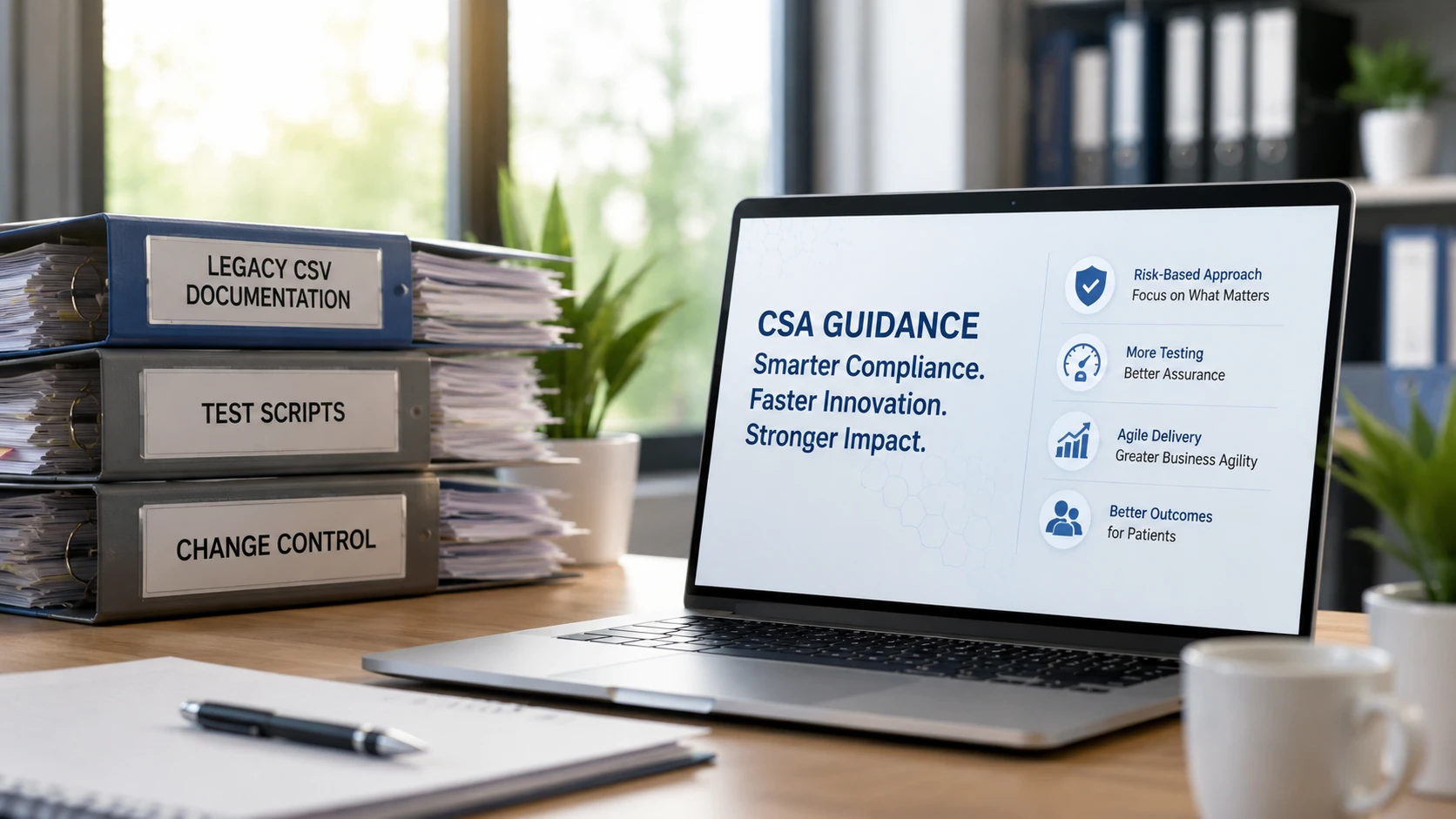
Let's be honest - for years, the pharmaceutical industry has been stuck in a frustrating loop. It frequently takes more time, money, and headache to validate a new application than it does to actually build it. The old-school Computer Software Validation (CSV) approach bred a culture of "compliance by screenshot," which bogged down IT roadmaps and practically killed digital innovation before it could start.
But with the FDA dropping its Computer Software Assurance (CSA) guidance, that era is effectively dead.
This isn't just another minor regulatory tweak. It’s a massive paradigm shift that forces a pivot away from generating mindless paperwork just to satisfy an auditor. Instead, it pushes teams back toward actual critical thinking and agility. For anyone in the C-suite or leading IT, adopting the CSA mindset is a strategic move that speeds up both the manufacturing floor and patient-facing technology.
The Core Shift: Critical Thinking Over Paperwork
So, what exactly is different? It really comes down to where you spend your time. Under the legacy CSV model, teams wasted the bulk of their energy generating "objective evidence" like rigid scripts and endless screenshots, rather than actually trying to break and test the software. The new CSA framework flips that completely.
| Feature | Traditional CSV (The Old Way) | Modern CSA (The FDA's New Guidance) |
| Effort Allocation | 80% Documentation / 20% Testing | 20% Documentation / 80% Testing |
| Testing Methodology | Highly scripted, rigid pass/fail steps | Unscripted, scenario-based exploration |
| Primary Focus | Defending compliance during an audit | Focusing on system quality and real patient safety |
| Deployment Speed | Slow, "Waterfall" deployments | Faster, agile rollout cycles |
The Risk Framework: Keeping it Simple
The FDA is now looking at risk through a much simpler, two-bucket lens based on what the software actually does (its intended use):
- High Process Risk: These are features directly touching product quality or patient safety - like a system automatically adjusting manufacturing temps. Those still absolutely require rigorous, scripted testing.
- Not High Risk: This covers things like general business operations, quality support workflows, or data monitoring. Under CSA, you don't need a massive script for these. You can rely on unscripted, ad-hoc testing, which instantly shaves off countless hours of admin work.
Pillar 1: Accelerating Manufacturing & Supply Chain
If you're running supply chain or manufacturing IT, CSA is essentially your green light for Industry 4.0. Upgrading heavy infrastructure like a Cloud ERP, MES, or LIMS doesn't have to be a multi-year validation nightmare anymore.
- Leaning on Vendors: You can finally stop reinventing the wheel by re-validating out-of-the-box SaaS features. If you perform a solid vendor assessment, you are now encouraged to lean on the comprehensive validation work that top-tier software providers have already done.
- Focusing on What Actually Matters: Think about your automation engineers. Instead of making them document simple tasks like moving data or restocking materials you can have them focus on what really matters. They can test the high-risk parts, which brings down the total cost of having the system. This way they do not waste time on low-risk tasks such as data transfers or material restocking. The testing is more focused, on high-risk parameters. This approach helps to lower costs. They save time and resources by not documenting every thing. The system costs less to own and operate.
Pillar 2: Innovating Commercial & Patient-Facing Apps
The benefits certainly don't stop on the shop floor. For Chief Commercial Officers and those steering Digital Health initiatives, keeping up with patient expectations means you need modern, slick experiences. Your commercial apps, patient portals, and CRM tools have to be updated constantly.
- True IT Agility: In the old CSV days, pushing a basic User Interface (UI) update to a patient app might trigger a massive, painful re-validation cycle. Not anymore. CSA gives teams the breathing room to deploy UI tweaks, roll out new training modules in an LMS, or update BI dashboards incredibly fast.
- Drawing a Line in the Sand: As long as you aren't messing with the core safety functions of a commercial app, your team can use exploratory testing for minor updates. This radically accelerates how fast you can get new patient engagement tools to market.
The Executive Action Plan: How to Transition
Making the leap to CSA is just as much a cultural shift as it is a procedural one. If you're an executive looking to actually operationalize this guidance, here is where you start:
- Rewrite the Internal SOPs: Let’s face it - most internal IT and Quality SOPs are way stricter than anything the FDA actually demands. Step one is rewriting these documents to explicitly allow for unscripted testing, exploratory testing, and risk-based scoping. Give your teams permission to work differently.
- Run a Pilot: You have to show the return on investment to those who are not convinced inside your company. Choose a project that does not have risk but is easy to see, like a new dashboard to track complaints or an upgrade to the learning management system. These are examples to try out the CSA method. Use the success of this project to get more people, in the company to use CSA.
- Look Ahead to Future Regs: Moving to CSA gets your organization in line with the FDA's bigger push toward global harmonization. It naturally prepares your systems for ISO 13485:2016 and the impending Quality Management System Regulation (QMSR) updates.
The Bottom Line
The FDA has handed the pharma industry a massive opportunity. Computer Software Assurance is really necessary to update your technology at a pace that's as fast, as your business. This is because the old way of doing things is too slow. By thinking about what is important leaders can save money get things done faster and focus on what really matters. What really matters is getting new treatments to patients. Computer Software Assurance helps leaders do this by making things simpler and faster.
About Author

More to Read
Your Regulatory Team will love us.

Requirement
Business Goal

Update
Implementation

Safety Check
Auto-validation

Audit Trail
Ready for Inspection
Requirement
Business Goal
Update
Implementation
Safety Check
Auto-validation
Audit Trail
Ready for Inspection