
Agentic AI Adoption: Moving Beyond Chatbots to Autonomous Enterprise Workflows
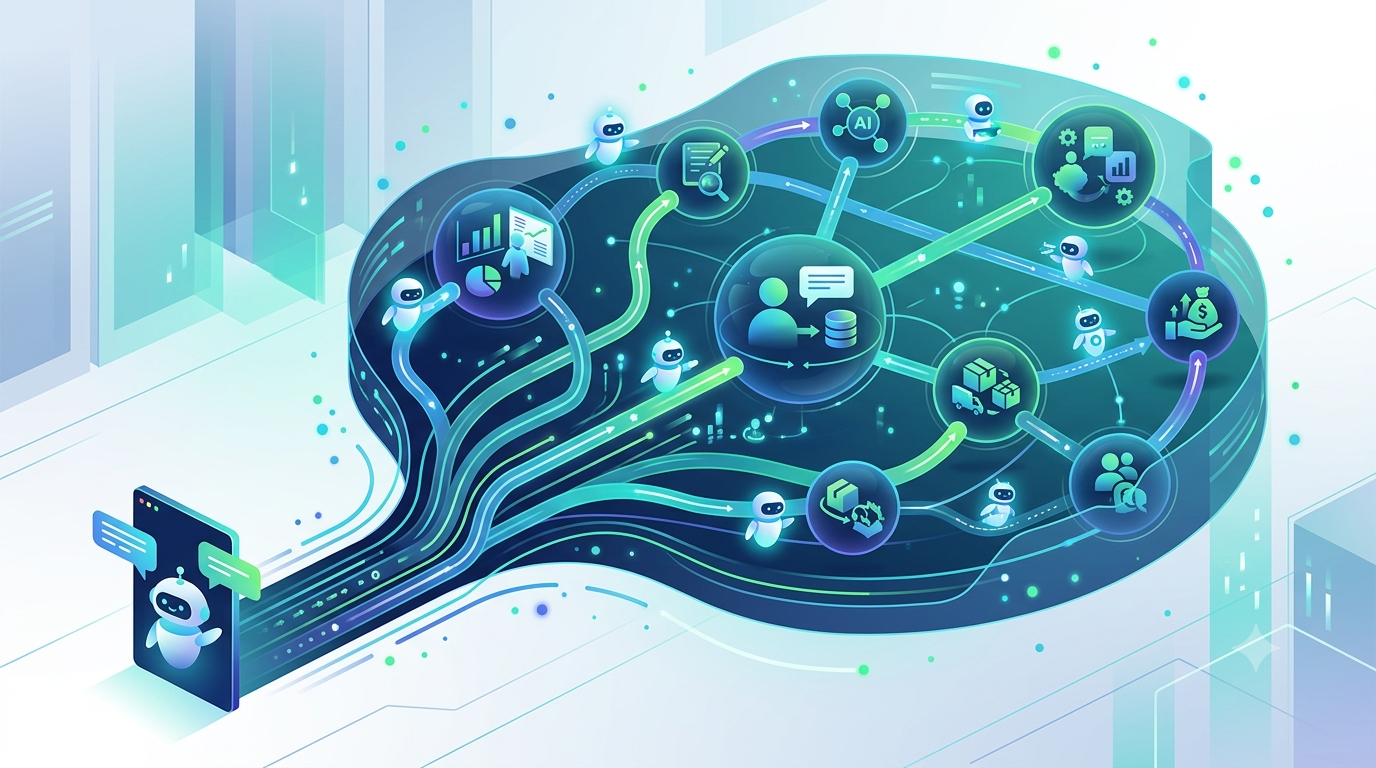
Agentic AI is moving far beyond chatbots. While most enterprises are still experimenting with basic conversational AI, a new wave of autonomous agents is transforming how work gets done. Here’s what Agentic AI adoption really means in 2026
The Shift from Chatbots to Agentic AI
We have officially moved past the chatbot era.
In 2026, Agentic AI — autonomous AI agents capable of understanding goals, planning tasks, making decisions, and executing complex multi-step workflows with minimal human intervention — is becoming the new standard for forward-thinking enterprises.
Unlike traditional chatbots that simply respond to questions, agentic systems can reason, use tools, interact with multiple enterprise systems, adapt to changing conditions, and complete entire business processes end-to-end.
This marks one of the most significant shifts in enterprise AI since the rise of large language models.
Why Most Enterprises Are Still Stuck
Despite heavy investment, the majority of organizations remain at the “advanced chatbot” stage. They have deployed conversational interfaces and basic assistants but have not achieved meaningful autonomy or workflow transformation.
The gap between pilot success and production-scale agentic AI is wide and dangerous. Many leaders are discovering that moving from reactive AI to proactive, goal-oriented agents is exponentially more difficult than expected.
The Agentic AI Maturity Gap
Most companies treat AI as a collection of features rather than a new operating model. They deploy isolated agents for narrow tasks but struggle to build coordinated, multi-agent systems that can handle complex, cross-functional workflows.
True agentic adoption requires a fundamental rethinking of how work is structured, governed, and executed across the enterprise.
The Orchestration Challenge
Agentic AI systems must reliably interact with ERP, CRM, HRM, legacy platforms, and external APIs. Building robust orchestration layers that allow agents to work safely, consistently, and efficiently across these systems is one of the biggest technical and architectural challenges.
Without strong orchestration, agents become unreliable, create operational risk, or fail silently.
The Governance and Trust Gap
Autonomous agents making decisions on behalf of the business raise critical questions around accountability, transparency, bias, explainability, and regulatory compliance.
Many enterprises lack mature governance frameworks to define clear boundaries, monitor agent behavior in real time, and maintain auditability — especially in regulated industries.
The Workforce Readiness Gap
The human side remains the biggest barrier. Employees are not prepared to work alongside autonomous agents. There is fear, lack of trust, and insufficient training on how to supervise, correct, and collaborate with AI agents effectively.
Without proper change management and upskilling programs, agentic AI adoption stalls or creates new friction.
Moving from basic chatbots to true agentic AI requires more than technology — it demands a new way of working. Problock helps enterprises design and implement safe, governed, and high-impact agentic AI workflows that deliver real business value. Visit problock.com to explore how we can support your agentic AI journey.
Comparison of AI Approaches
| Dimension | Traditional Chatbots | Basic AI Assistants | Mature Agentic AI Systems |
|---|---|---|---|
| Capability | Reactive responses | Task assistance | Goal-oriented autonomous execution |
| Integration & Orchestration | Limited | Moderate | Deep, reliable multi-system orchestration |
| Governance & Control | Basic | Improved | Continuous monitoring and auditability |
| Business Impact | Low | Medium | High (end-to-end workflow automation) |
| Organizational Readiness | Low effort | Moderate | High investment in change and upskilling |
Building a Successful Agentic AI Strategy
Leading organizations in 2026 are taking a disciplined approach:
- Start with high-value, well-defined business workflows
- Build strong orchestration and governance layers first
- Design thoughtful human-AI collaboration models
- Invest in continuous monitoring and feedback systems
- Focus relentlessly on measurable business outcomes
Agentic AI is not just an upgrade - it is a new paradigm for how work gets done in the enterprise.
About Author

More to Read
Your Regulatory Team will love us.

Requirement
Business Goal

Update
Implementation

Safety Check
Auto-validation

Audit Trail
Ready for Inspection
Requirement
Business Goal
Update
Implementation
Safety Check
Auto-validation
Audit Trail
Ready for Inspection